


Key Highlights
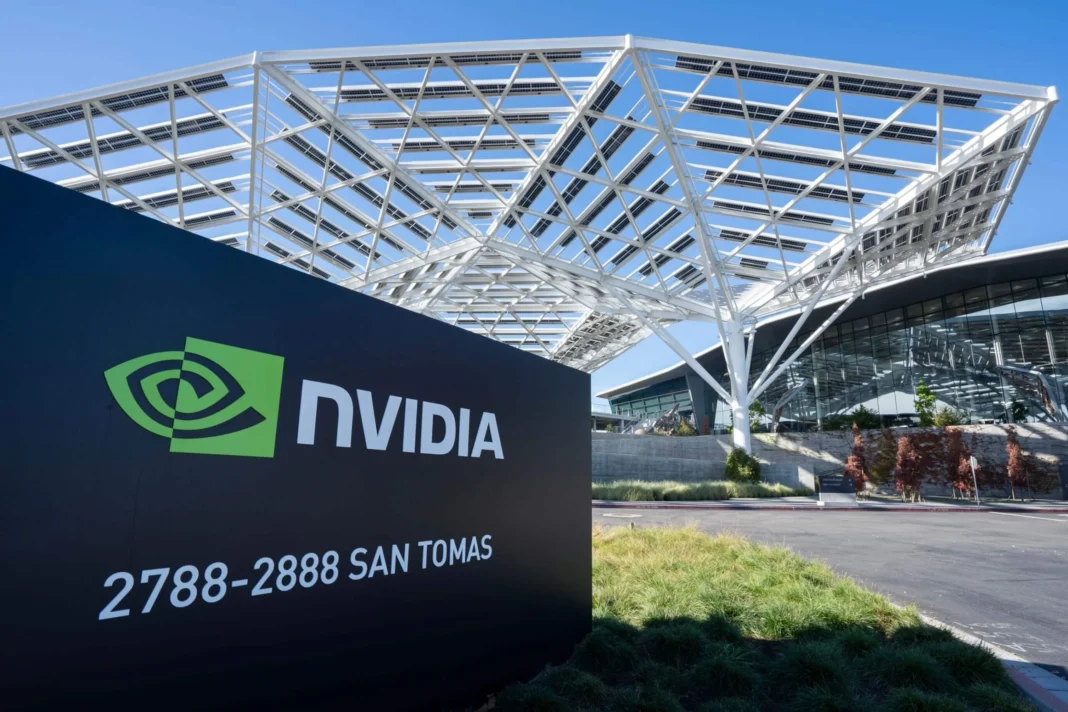
Nvidia delivered earnings that exceeded Wall Street forecasts, yet shares dipped approximately 1% in extended trading as the market sought more robust AI demand indicators
SpaceX submitted its S-1 filing with the Securities and Exchange Commission, offering investors an unprecedented glimpse into its financial position before June roadshow presentations
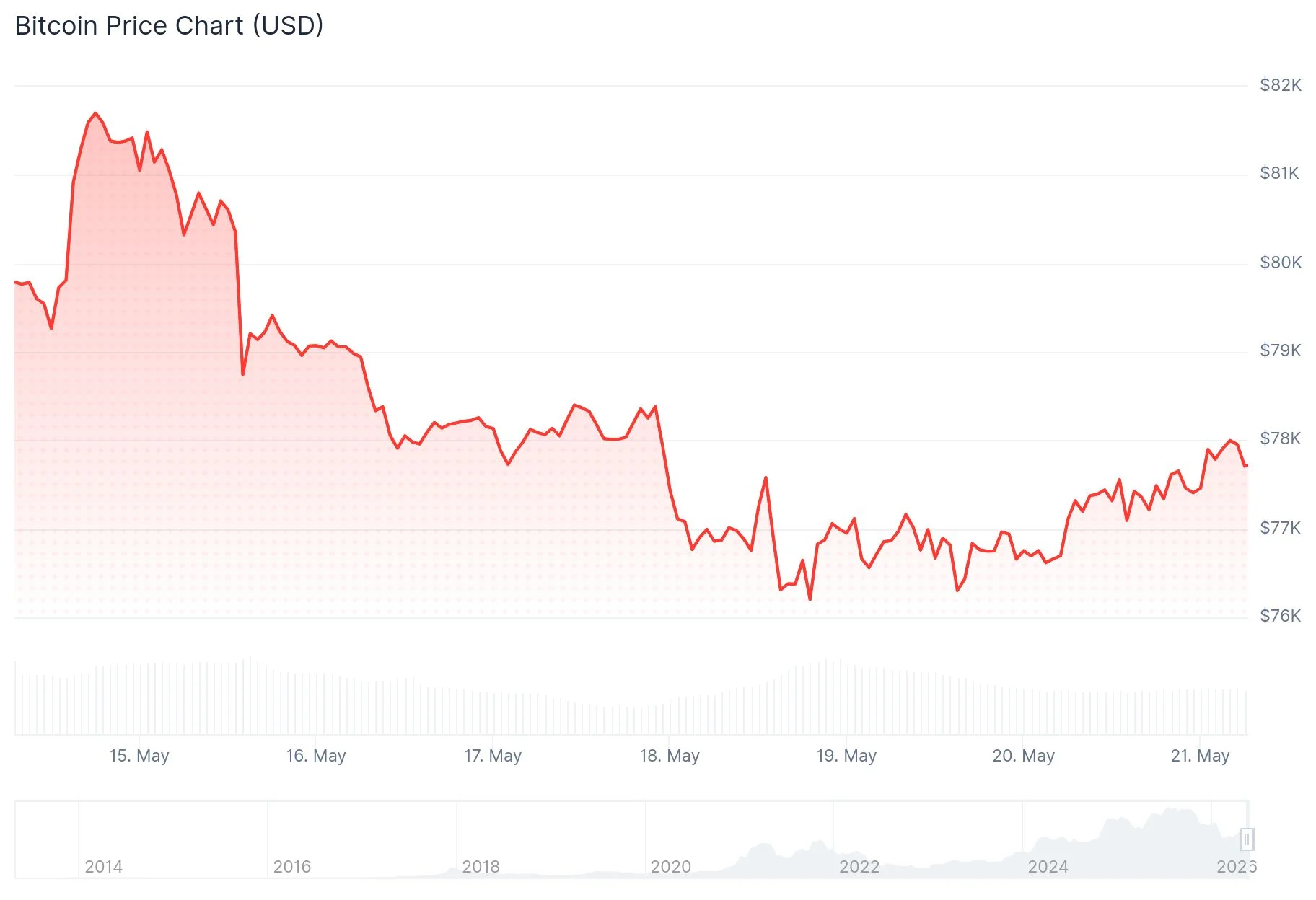
Bitcoin climbed 0.8% to approximately $77,576 but has retreated from its recent peak above $82,000 reached after favorable U.S. Senate crypto bill advancement
Minutes from the Federal Reserve meeting suggested potential rate increases if inflation persists above the 2% target, creating headwinds for digital asset valuations
European banking alliance Qivalis expanded by 25 members, reaching 37 financial institutions spanning 15 nations, working toward a euro-backed stablecoin launch
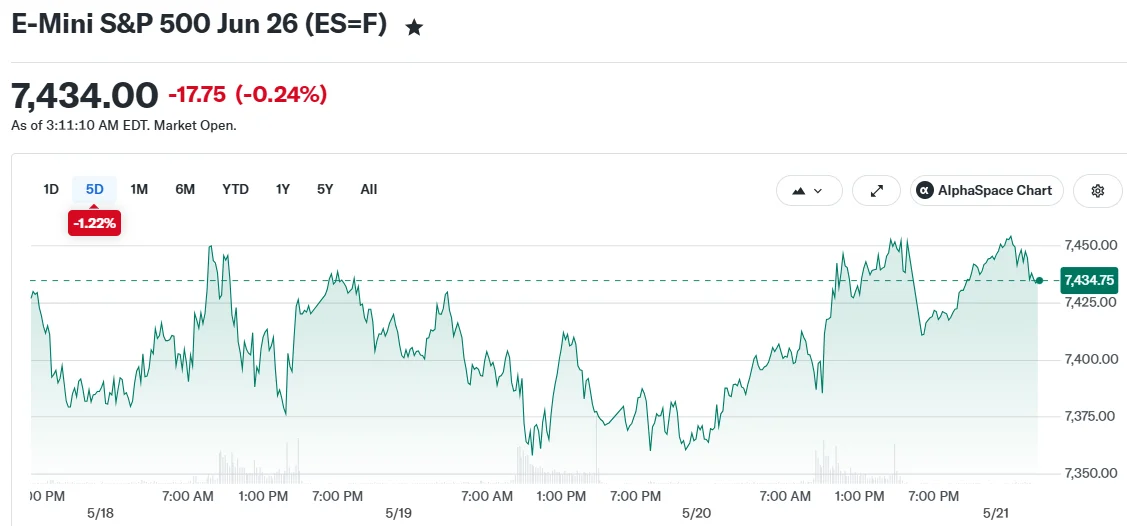
American equity futures declined Thursday following Nvidia’s quarterly results, which fell short of the exceptional performance market participants anticipated. Simultaneously, Bitcoin maintained its position above the $77,000 threshold as cryptocurrency traders navigated concerns over tightening monetary policy.
Nvidia Surpasses Forecasts Yet Fails to Satisfy Bulls
Nvidia unveiled its quarterly performance following market close, exceeding analyst projections for both top-line revenue and bottom-line earnings. The chipmaker also provided optimistic guidance for semiconductor demand.
However, market participants were anticipating more substantial indications of artificial intelligence chip appetite. The stock retreated approximately 1% during after-hours sessions.
Dow Jones Industrial Average futures declined 0.2%. Contracts linked to the S&P 500 dropped 0.1%, while Nasdaq 100 futures retreated roughly 0.3%.
Moments after Nvidia’s disclosure, SpaceX submitted its S-1 registration document to the SEC. The paperwork provided an uncommon public window into the aerospace company’s financial health.
SpaceX has scheduled investor presentations for June, marking another milestone toward potential public market participation.
Before the closing bell, equities had advanced after President Trump indicated the United States was approaching the “final stages” of diplomatic talks with Iran. Crude oil prices retreated following this announcement.
The quarterly reporting period continues its conclusion, with Walmart, Ross Stores, Workday, and Zoom scheduled to announce results Thursday.
Bitcoin Finds Footing While Rate Uncertainty Limits Upside
Bitcoin advanced 0.8% to roughly $77,576 Wednesday, attempting to halt a five-session decline.
The leading digital currency by market capitalization had surged beyond $82,000 last week following the U.S. Senate Banking Committee’s approval of significant cryptocurrency regulation. Since that milestone, prices have gradually eroded.
Nexo Dispatch analyst Dessislava Ianeva observed that spot market appetite has weakened since mid-May, with net outflows persisting for nine straight trading days ending May 19. She emphasized that daily transaction volumes remain subdued.
Federal Reserve meeting records published Wednesday revealed that a majority of policymakers consider rate increases would probably be warranted should inflation remain elevated above the 2% objective.
Recent inflation metrics have reflected the influence of climbing energy costs. Year-over-year consumer price acceleration reached its strongest reading since May 2023, while producer price expansion registered its largest jump since December 2022.
Elevated borrowing costs typically create resistance for speculative investments including digital currencies.
Most alternative cryptocurrencies posted modest gains. Ethereum increased 0.8%, XRP rose 0.7%, and Solana climbed 2%.
In related developments, European banking coalition Qivalis welcomed 25 additional members, expanding its network to 37 financial institutions operating across 15 countries. Participants include ING, BNP Paribas, BBVA, and Nordea.
Qivalis intends to introduce a euro-denominated stablecoin before year-end. The consortium is framing the initiative as a European counterweight to American leadership in digital payment infrastructure.