



Key Takeaways
Bitcoin has remained confined to a $62,000–$66,000 trading corridor for several weeks as ETF demand faces offsetting pressure from mining operations and corporate treasury sales
Since June, Strategy has liquidated 6,916 BTC valued at more than $440 million, marking a departure from Michael Saylor’s long-held commitment against selling
Market participants are looking to Wednesday’s Consumer Price Index release as the potential trigger for Bitcoin’s next directional move
Trading activity across cryptocurrency markets has fallen to three-year lows
Technical indicators show a weekly RSI buy signal still in play, though $60,000 represents critical support
Throughout the summer months, Bitcoin has maintained a narrow trading band between $62,000 and $66,000, with Tuesday’s session following the established pattern. BTC retreated to approximately $63,500, registering a 0.6% decline over the previous 24-hour period, continuing a five-week period of minimal movement.
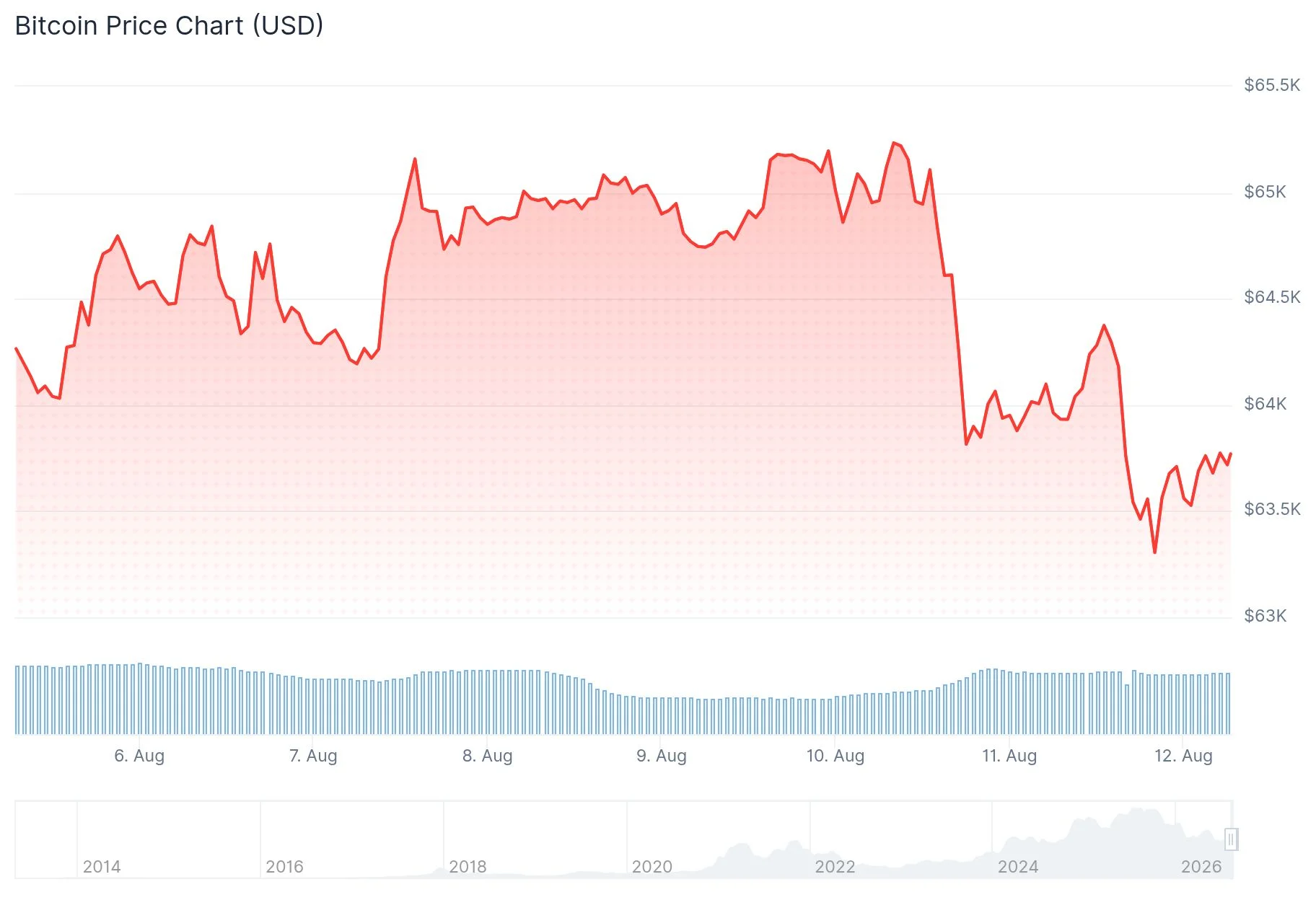
Trading volumes across the cryptocurrency sector have contracted to levels not witnessed in three years. This lack of liquidity has left insufficient momentum to drive meaningful price action in either direction.
“The recent trajectory of Bitcoin pricing has been predominantly influenced by persistent ETF accumulation being counterbalanced by over-the-counter liquidations from mining entities and Strategy,” explained Paul Howard, who serves as senior director at the trading firm Wincent.
While ETF purchases have maintained consistency, they continue to be neutralized by selling pressure. Analysts at Bitfinex observed that corporate treasury operations have generated offsetting sales, explaining why BTC managed only approximately 2% gains last week despite robust ETF inflows.

Strategy’s Unexpected Bitcoin Liquidations Draw Attention
Strategy, the company led by Michael Saylor, has liquidated 6,916 BTC — representing more than $440 million — since the beginning of June, executing four straight sales. Two transactions were allocated toward building a USD reserve, while the remaining pair funded share repurchase programs for MSTR stock.
This represents a notable departure from Saylor’s previously unwavering stance against selling Bitcoin holdings. Large-wallet investors have accumulated approximately 30,000 BTC during August alone, yet Strategy’s liquidations have contributed additional downside pressure.
The recent Coldcard wallet security breach introduced further market uncertainty. Current estimates place the losses somewhere between 1,400 and 1,700 BTC, representing a value exceeding $100 million.
Market attention has now centered on Wednesday’s scheduled U.S. Consumer Price Index inflation report. This represents the first significant inflation data release following Fed Chair Kevin Warsh’s inflation-centric press conference that followed the July Federal Reserve meeting.
“Conviction remains minimal across both bullish and bearish camps as summer liquidity conditions continue to dominate,” noted Jeff Anderson, who serves as managing partner at STS Digital.
Technical Analysis Perspective
Examining the weekly timeframe, a buy signal that materialized when the Relative Strength Index touched 30 continues to remain valid. Historically, this particular signal has successfully identified the conclusion of bear market phases in two of three previous instances.
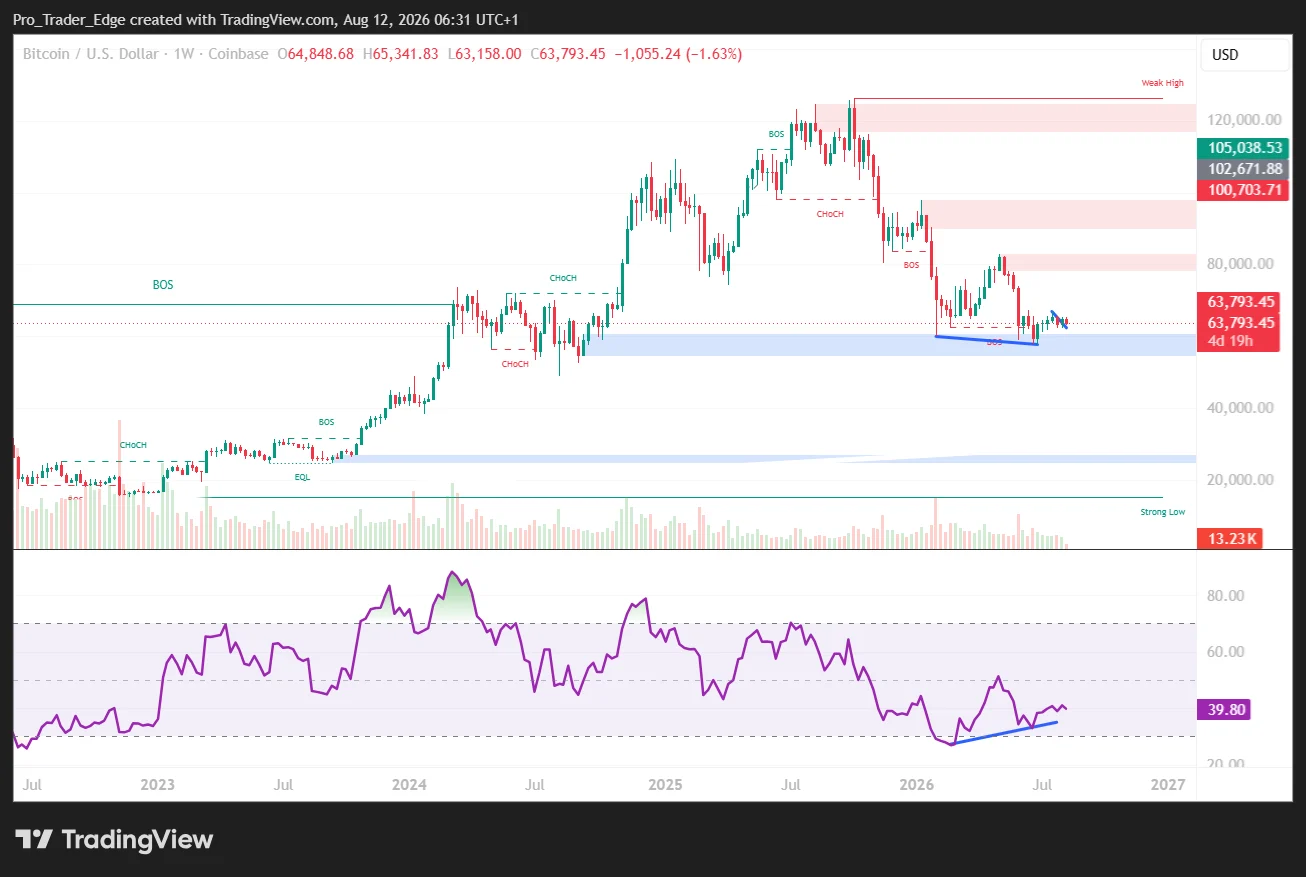
Nevertheless, the $60,000 price level demands close monitoring. A decisive breach beneath that threshold would significantly undermine the bullish scenario suggested by this technical indicator.
Market analyst Ted Pillows highlighted on X that Bitcoin surged 10.75% during the week following June’s CPI announcement and climbed 7.58% after July’s release. With another CPI report scheduled for Wednesday, he posed the question: “What’ll happen this time?”
Historical data from CoinGlass reveals that September has traditionally been Bitcoin’s most challenging month, posting an average 4% decline since 2013.